
When To See A Physiotherapist: 7 Signs It’s Time To Get Support
Many people think physiotherapy is only for sports injuries, sore backs, or recovery after surgery. While physiotherapists certainly help with these concerns, physiotherapy can also support balance, walking, strength, confidence, falls prevention, chronic pain, neurological conditions, disability, ageing-related changes, and everyday independence.
A good time to see a physiotherapist is when pain, stiffness, weakness, reduced balance, a fall, surgery, a hospital stay, or a health condition is starting to affect how safely and confidently you move. Physiotherapy uses physical techniques to help treat conditions and injuries, and may help improve movement and function, reduce pain and stiffness, and improve quality of life.
At Thrive Canberra Home Physio, we often meet people at a point where they are asking, “Is this bad enough to get help?” or “Should we wait and see?” The answer depends on the situation, but in many cases, early support can make movement feel safer, clearer, and less overwhelming.
Quick Answer: When Should You See A Physiotherapist?
You may benefit from seeing a physiotherapist if you are:
having pain that is affecting daily life
feeling less steady on your feet
worried about falling
recovering after surgery, illness, or hospital
finding it harder to walk, climb stairs, get out of a chair, or move around home
living with a condition such as Parkinson’s disease, stroke, arthritis, dementia, chronic pain, frailty, or disability
unsure whether your walking aid, exercise plan, or home setup is right for you
Physiotherapists in Australia are registered health practitioners, and physiotherapists must be registered with the Physiotherapy Board of Australia to practise.
You usually do not need a doctor’s referral to see a physiotherapist as a private client, although a referral may be needed for Medicare Chronic Disease Management, DVA, NDIS, Home Care Package, or other funded pathways. Healthdirect notes that Medicare may cover some physiotherapy visits for certain conditions when a doctor has referred you and you have a Chronic Disease Management Plan.

Visual checklist showing reasons to see a physiotherapist including pain balance falls surgery recovery mobility decline and neurological conditions
You Have Pain That Is Affecting Daily Life
Pain is one of the most common reasons people contact a physiotherapist. This might include back pain, hip pain, knee pain, shoulder pain, arthritis pain, joint stiffness, muscle tightness, or pain after an injury.
It may be time to see a physio if pain is making it harder to:
get out of bed or a chair
walk around the house
sleep comfortably
dress, shower, or prepare meals
climb stairs
leave the house
keep up with work, caring roles, hobbies, or social activities
Pain does not need to be severe before you ask for help. Sometimes mild or moderate pain can still have a big impact if it changes the way you move, makes you avoid activity, or causes you to lose confidence.
A physiotherapist can assess how you are moving, look at what may be contributing to the problem, and help you build a practical plan. This might include strengthening, mobility exercises, balance work, pacing advice, hands-on treatment where appropriate, and strategies for daily activities.
For older adults, pain is not something that should simply be “put up with”. While some conditions may not disappear completely, physiotherapy may help improve comfort, confidence, movement, and participation in daily life.
2. You Are Feeling Less Steady Or Worried About Falling
You do not need to wait until a fall happens to see a physiotherapist. Changes in balance, walking, or confidence are important signs that support may be useful.
You might notice that you or someone you care for is:
holding onto furniture when walking through the house
avoiding uneven ground, shopping centres, driveways, or garden paths
feeling nervous on stairs or kerbs
walking more slowly than before
shuffling or taking smaller steps
avoiding social outings because walking feels too tiring or unsafe
feeling worried after a near fall
After a fall or near fall, a physiotherapy assessment can help identify what may be contributing. This might include leg strength, balance reactions, walking pattern, pain, dizziness, footwear, medication-related concerns to discuss with a doctor, or home hazards such as mats, poor lighting, or difficult bathroom access.
Falls can also affect confidence. A person may start moving less because they feel unsafe, but moving less can then lead to reduced strength, fitness, and balance over time. Physiotherapy can help rebuild confidence gradually with exercises and strategies matched to the person’s ability and goals.
Thrive provides falls prevention and balance training as part of its mobile physiotherapy services across the Canberra region.
3. You Are Recovering After Surgery, Hospital, Or Illness
Physiotherapy can be helpful after surgery, including hip, knee, shoulder, spinal, abdominal, or other procedures where movement, strength, and confidence are affected.
After surgery, a physiotherapist may help with:
walking practice
safe transfers in and out of bed or chairs
range of movement
strengthening
swelling management advice
balance and falls prevention
stair practice
returning to daily routines safely
Physiotherapy can also be valuable after a hospital stay, even if the admission was not for surgery. Time in hospital can leave people feeling weaker, more tired, less steady, or less confident than before. This is particularly common for older adults or people living with multiple health conditions.
Home physiotherapy can be especially useful in this stage because the physio can assess the person in the environment where they actually need to move. That might include getting out of their own bed, walking to the bathroom, using the shower, navigating a hallway, managing steps, or walking to the mailbox.
Thrive’s services include pre- and post-operative rehabilitation, recovery after hospital stays, strength and flexibility, neurological rehabilitation, respiratory rehabilitation, arthritis and pain management, and falls prevention and balance training.
4. You Have A Neurological Condition Or Changes In Movement
Physiotherapy is not only about muscles and joints. It can also support people living with neurological conditions such as Parkinson’s disease, stroke, brain injury, multiple sclerosis, dementia-related movement changes, or other conditions that affect movement, balance, coordination, strength, or walking.
You may benefit from seeing a physiotherapist if you notice:
slower or smaller movements
reduced arm swing when walking
shuffling steps
freezing or hesitation when starting to walk
changes in posture
reduced balance reactions
difficulty turning
difficulty getting out of chairs
reduced confidence walking outside
increased reliance on family or carers for mobility
For people living with Parkinson’s disease, targeted physiotherapy can support mobility, strength, balance, walking, posture, and movement confidence. Thrive provides one-on-one Parkinson’s physiotherapy at home and offers LSVT BIG through certified support in the ACT region.
Physiotherapy can also support carers and family members. A physiotherapist may provide guidance around safe transfers, walking support, exercise routines, mobility aids, and ways to encourage movement without making the person feel rushed or unsafe.
5. You Are Finding Everyday Tasks Harder
Sometimes the first sign that physiotherapy may help is not pain, but a gradual change in everyday function.
You might notice that tasks such as getting out of a chair, getting into bed, showering, dressing, walking to the letterbox, carrying groceries, gardening, or attending appointments have become harder.
These changes can happen for many reasons, including pain, weakness, reduced activity, illness, surgery, neurological conditions, arthritis, balance concerns, fatigue, or fear of falling.
A physiotherapist can help break these tasks down and work on the skills needed to complete them more safely. For example, if getting out of a chair is difficult, the plan may include leg strengthening, sit-to-stand practice, checking chair height, balance work, and advice about where to place hands and feet.
This is where home physiotherapy can be particularly practical. The assessment happens in the real environment, using the person’s own chair, bed, bathroom, hallway, step, or walking aid.
6. You Have A Long-Term Condition That Affects Movement
Physiotherapy may also help people manage long-term conditions that affect movement, independence, comfort, and confidence.
This may include:
arthritis
chronic pain
frailty
Parkinson’s disease
stroke
dementia
disability
respiratory conditions such as COPD or breathlessness
osteoporosis or reduced strength
reduced mobility after illness or inactivity
The goal is not always to “fix” everything. Often, physiotherapy focuses on helping a person maintain or improve what matters most to them. That might be walking more confidently, staying strong enough to get out of a chair, reducing falls risk, managing pain better, maintaining independence at home, or continuing meaningful routines.
Healthdirect lists arthritis, neurological conditions such as Parkinson’s disease and multiple sclerosis, rehabilitation after surgery, stroke rehabilitation, chronic conditions affecting the heart and lungs, and musculoskeletal problems among the areas where physiotherapists may help.
7. You Need Help Choosing Or Using A Mobility Aid
A walking stick, frame, rollator, wheelchair, or other mobility aid should support independence, not make movement feel more confusing or unsafe.
It may be time to see a physiotherapist if:
you are unsure which walking aid is right
your current aid feels too high, too low, or awkward
you feel unsafe turning or changing direction
you are using furniture or walls instead of a walking aid
a family member has bought an aid but no one has checked whether it suits you
you are worried that using an aid means “giving up”
A physiotherapist can help assess the most suitable option, adjust the height, practise safe use, and make sure the aid fits the person’s goals and environment.
For many people, the right mobility aid can increase freedom. It may make it easier to move around home, attend appointments, go shopping, spend time with family, or return to enjoyable activities with more confidence.
When Should You See A Doctor Or Call 000 Instead?
Physiotherapy is not a replacement for urgent medical care. Some symptoms need immediate medical attention.
Call triple zero, 000, if you or someone else may be having a medical emergency. For example, signs of stroke can include face drooping, difficulty moving the arms, or slurred speech, and Healthdirect advises calling triple zero immediately if stroke signs are present.
Seek urgent medical help or speak with a doctor promptly if there is:
chest pain or difficulty breathing
sudden weakness, facial drooping, speech difficulty, or suspected stroke
severe pain after a fall, accident, or injury
suspected fracture
head injury, confusion, or loss of consciousness
sudden worsening of symptoms
new loss of bladder or bowel control
unexplained weight loss, fever, or feeling very unwell with pain
numbness, pins and needles, or worsening leg symptoms
For low back pain, see a doctor if there are symptoms such as loss of bowel or bladder control, severe pain that worsens over time, problems passing urine or bowel motions, numbness or pins and needles, or unexplained weight loss. (
When in doubt, it is safer to seek medical advice.
Can A Physiotherapist Come To Your Home?
Yes. Home physiotherapy can be a practical option for people who find clinic visits difficult, tiring, unsafe, or stressful.
This may suit older adults, NDIS participants, Home Care Package clients, people recovering after surgery or hospital, people living with Parkinson’s disease or stroke, people with disability, people with fatigue, people using mobility aids, and families or carers who want support in the home environment.
Thrive Canberra Home Physio is a mobile physiotherapy service that visits people wherever they call home, including homes, aged-care facilities, retirement villages, community settings, pools, and hydrotherapy settings. Thrive services Canberra and nearby NSW regions including Tuggeranong, Woden, Weston Creek, Belconnen, Gungahlin, Inner North, Inner South, Queanbeyan, Jerrabomberra, Googong, Karabar, and surrounding areas.
A home visit allows the physiotherapist to see how the person moves in their real day-to-day setting. This can make the treatment plan more practical and relevant.
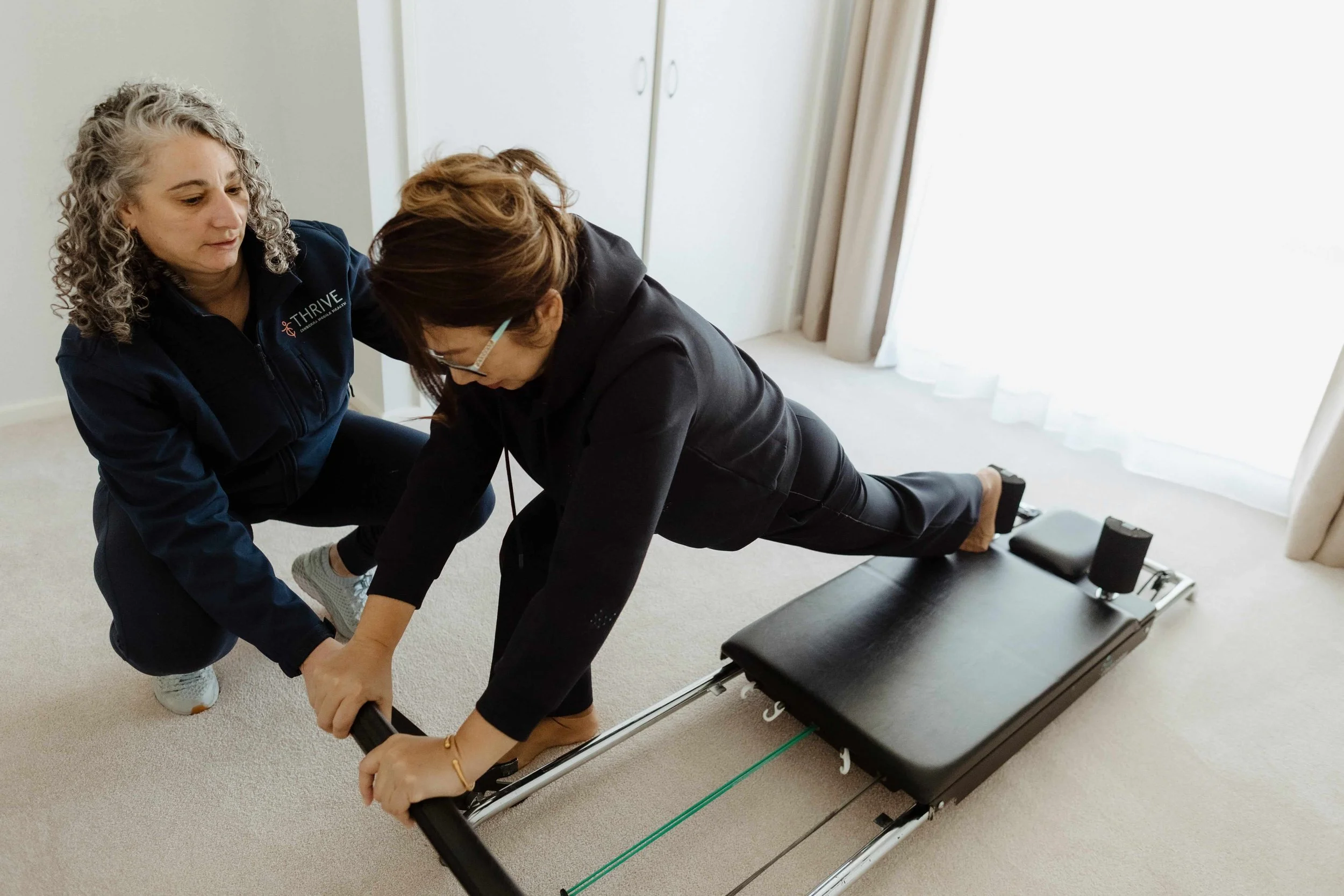
What Happens At Your First Physiotherapy Appointment?
Your first physiotherapy appointment usually starts with a conversation. Your physiotherapist will ask about your concerns, health history, mobility, pain, recent changes, falls history, goals, and what daily tasks matter most to you.
Your goals might be simple and meaningful, such as:
getting out of a chair more easily
walking to the bathroom overnight more safely
returning to gardening
feeling steadier in the shower
building strength after hospital
walking to the mailbox
reducing fear of falling
improving confidence after surgery
The physiotherapist may then assess strength, balance, walking, joint movement, pain, transfers, stairs, breathing, endurance, mobility aids, and relevant parts of the home environment.
From there, they will create a plan that suits your goals, abilities, health conditions, and living situation. Thrive describes the initial consultation as including a physical assessment, listening closely to the client’s needs, concerns and goals, and then creating a personal plan based on that assessment.

Physiotherapist completing a home-based balance assessment with an older adult
How Thrive Canberra Home Physio Can Help
At Thrive Canberra Home Physio, care is designed to be practical, compassionate, evidence-based, and led by the person’s goals.
Thrive supports people across Canberra and nearby NSW with:
in-home physiotherapy
LSVT BIG therapy
neurological rehabilitation
post-operative rehabilitation
post-hospital recovery
arthritis and pain management
strength, flexibility, and mobility programmes
respiratory rehabilitation
manual handling training
support for older adults, NDIS participants, Home Care Package clients, Medicare clients, aged-care clients, and private clients
Thrive is a locally owned, woman-led mobile physiotherapy service providing evidence-based, compassionate care at home, with senior clinical physiotherapists supporting older adults, NDIS participants, and Home Care Package clients to stay mobile, confident, and independent.
If you are not sure whether physiotherapy is the right next step, you can contact Thrive to discuss your concerns and whether a home physio visit may be suitable.
FAQs About Seeing A Physiotherapist
Do I need a referral to see a physiotherapist in Australia?
In many cases, you do not need a GP referral to see a physiotherapist as a private client. A referral or documentation may be needed for Medicare Chronic Disease Management, DVA, NDIS, Home Care Package, or other funded pathways.
Should I see a physio if I am not in pain?
Yes, physiotherapy may still be helpful if you are noticing reduced balance, weakness, stiffness, slower walking, difficulty with daily tasks, or a loss of confidence. Physiotherapy is not only for pain.
Should I see a physiotherapist after a fall?
It is often a good idea to see a physiotherapist after a fall or near fall, especially if you feel less steady or worried about falling again. Seek medical care first if there is severe pain, suspected fracture, head injury, sudden weakness, chest pain, confusion, or other concerning symptoms.
Can a physiotherapist visit me at home?
Yes. Thrive Canberra Home Physio provides mobile physiotherapy across Canberra and nearby NSW regions, including home visits, aged-care settings, retirement villages, community settings, pools, and hydrotherapy centres.
What should I expect at my first physiotherapy appointment?
Your physiotherapist will usually ask about your concerns and goals, assess your movement, strength, balance, pain, walking, and daily function, then create a practical plan tailored to your needs.
Ready To Talk About Home Physiotherapy In Canberra?
Seeing a physiotherapist does not mean you have failed or waited too long. It can be a positive step towards moving more safely, understanding your body, rebuilding confidence, and staying involved in the activities that matter to you.
Whether you are managing pain, recovering after hospital, supporting an ageing parent, living with Parkinson’s disease, using an NDIS plan, or simply feeling less steady than before, Thrive Canberra Home Physio can help you explore practical next steps at home.
Contact Thrive Canberra Home Physio to learn more or book a home physiotherapy visit across Canberra and nearby NSW.