
What can you do today to manage chronic pain while still staying confident and independent? This guide shares practical, evidence-informed steps for older adults and carers, with a focus on safe movement, daily habits, and when to get extra help.
In Australia, the Australian Institute of Health and Welfare reports chronic pain becomes more common with age, reaching about 24% of people aged 85 and over in 2016.
What is chronic pain in older adults and why does it affect everyday life
Chronic pain is pain that lasts at least 3 months, or continues beyond the expected healing time.
Common causes in older adults include arthritis, persistent back or neck pain, nerve pain, and ongoing pain after surgery or hospital stays. Chronic pain can affect sleep, mood, and mental health, and can make people avoid movement, which then increases stiffness and weakness.
Key takeaway: chronic pain management for seniors works best when it supports comfort and function, not only temporary relief.
Why chronic pain management for seniors matters for independence and falls risk
When pain leads to less movement, strength and balance can drop, and falls risk can increase. Thrive Canberra Home Physio supports older adults with mobility and balance for elderly clients through home visits and falls prevention programs across the Canberra region. The aim is to keep you doing everyday tasks safely, like walking, showering, and getting out of a chair.
How gentle exercises for seniors help reduce pain
One of the most reliable senior pain relief strategies is regular, low-impact movement. Australian physical activity guidelines for people aged 65+ recommend being active on most days, and building up gradually if 30 minutes feels too much right now.
Gentle exercises for seniors that often work well include:
Short walks on flat ground
Sit-to-stands from a stable chair
Heel raises while holding a bench
Seated knee extensions
Light strengthening with bands (when appropriate)
Safety tips:
Start small and repeat often
Use stable support for balance work
Stop and seek advice if pain is sharp, new, or worsening
Low-impact pain relief techniques are safest when they are personalised to your health, balance, and goals.

What daily habits support pain management tips for older adults
Small routines can reduce flare-ups and make movement easier to stick with.
How sleep hygiene can reduce pain sensitivity
Healthdirect notes chronic pain can affect sleep and mood, and treatment usually works best when it combines multiple strategies.
Try:
The same wake time most days
Reduce screens and bright lights before bed
Supportive pillows for hips, knees, or shoulders
When to use heat and cold safely
Heat can help stiffness and aching.
Cold can help after activity or when swelling is present.
Use a towel barrier and limit to 10 to 20 minutes.
Simple mind-body tools to calm the nervous system
Healthdirect includes relaxation techniques and psychological approaches as part of chronic pain care.
Examples:
Slow breathing for 2 minutes during a flare
Gentle yoga or chair yoga
Tai chi for relaxed balance practice
Daily habits will not replace treatment, but they can make pain easier to manage day to day.
What else helps with senior pain relief strategies beyond exercise
Assistive devices and home set-up changes
Walking aids, rails, shower chairs, and chair-height changes can reduce strain and make daily tasks safer. A home visit can help you trial options in your own environment.
Falls prevention physiotherapy Canberra.
Medication safety and GP coordination
Medicines can be an important part of pain management, but as we age, our bodies process medications differently. This means older adults may be more sensitive to side effects or drug interactions, especially when taking multiple prescriptions. Healthdirect provides guidance on medicines safety for older people.
Practical steps:
Keep one up-to-date medication list
Ask your GP or pharmacist for regular reviews
Report dizziness, confusion, or increased unsteadiness early
Footwear and posture adjustments
Supportive shoes with a stable sole can reduce joint load and improve balance. Small posture cues like standing taller and taking shorter steps during a flare can reduce strain on the back and hips. Remove unnecessary strain first, then build strength and walking tolerance.
How physiotherapy for elderly pain can help when it is done at home
Physiotherapy for elderly pain is most effective when it is tailored to the person, their home set-up, and their goals.
Thrive Canberra Home Physio provides mobile physiotherapy across Canberra, supporting pain management and falls prevention, and making it easier to stay consistent without travelling to a clinic.
A home-based plan may include:
Personalised assessment of pain triggers, mobility, and balance
Manual therapy and pain relief techniques when appropriate
Strength, flexibility, and walking practice
Education for family and carers to support progress
Contact us at Thrive Canberra Home Physio to discuss a home physiotherapy visit.
When should you seek medical help for chronic pain in older adults
Seek medical review if there is:
Sudden severe pain that is different from usual
New numbness, tingling, or weakness
New bowel or bladder changes
Fever, unexplained weight loss, or severe night pain
A major drop in mobility or balance
Pain is common, but red flags are not.
A simple weekly plan for chronic pain management for seniors
Choose one gentle activity you can do daily, even 5 minutes.
Add one strength exercise 3 times this week (sit-to-stands is a good start).
Use heat or cold safely during flare-ups.
Pick one sleep habit to improve (same wake time helps).
Track what triggers pain and what helps.
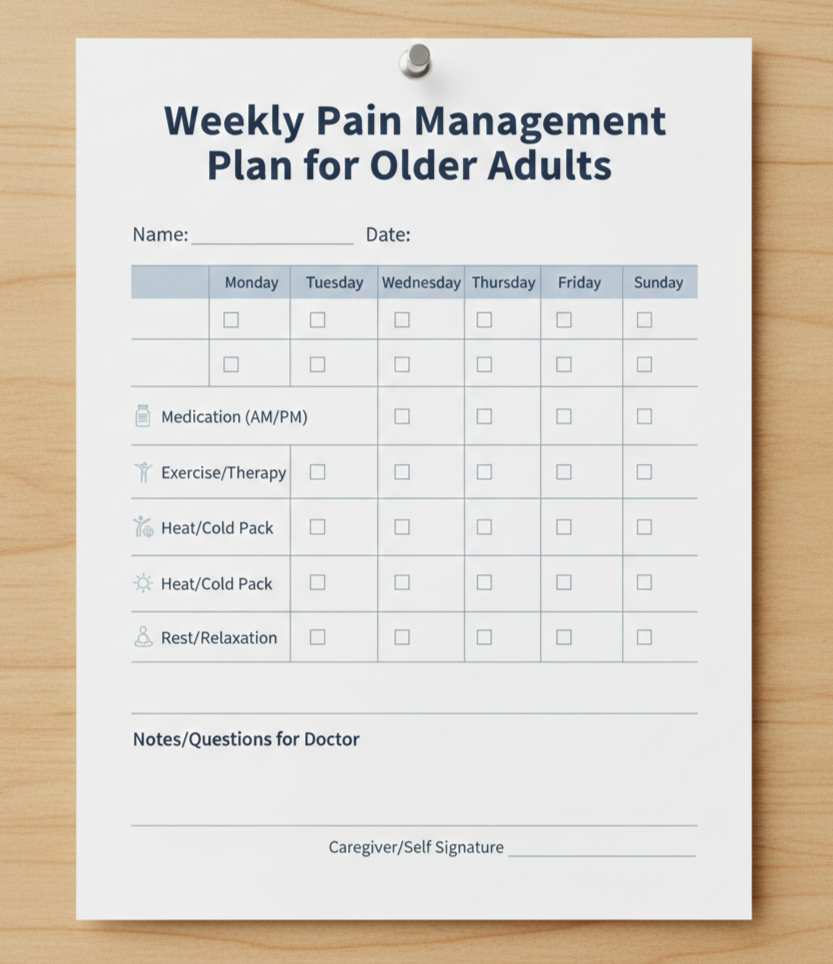
A simple weekly plan for chronic pain management for seniors
Frequently Asked Questions about chronic pain management for seniors
What causes chronic pain in older adults
Arthritis, persistent back pain, nerve pain, and pain that continues after injury or surgery are common causes. Chronic pain is defined as pain lasting at least 3 months.
Is it safe for seniors to exercise with chronic pain
Often yes, but it should be tailored to your health, balance, and symptoms. If you are unsure, ask a physiotherapist or GP before increasing activity.
How can physiotherapy help reduce pain
Physiotherapy can improve strength, joint mobility, walking tolerance, and confidence, and it can reduce falls risk with targeted balance training.
What types of pain respond best to home physiotherapy
Many people with arthritis pain solutions needs, ongoing joint or back pain, reduced mobility after hospital stays, and balance issues can benefit from a home program focused on function.
When should a senior seek advanced medical care
If pain is sudden and severe, or there are new neurological symptoms like weakness or numbness, seek urgent medical advice. If in doubt, contact your GP.
Thrive Canberra Home Physio specialises in personalised chronic pain management for older adults. If you would like support with chronic pain management for seniors, gentle exercises for seniors, or falls prevention at home, call 0434 543 165 or contact the team via our website.
